Rockford Local
Cabinet Enamel That Holds Up to a Real Kitchen
Spray-applied enamel on cabinets, molding, and trim across Wright County and the western Twin Cities suburbs.
Free estimate
Tell us what you need
Three fields. It reaches a person here, not a call centre.
Cabinet enamel done by a finishing specialist
Enamel is the right finish for cabinets because it cures hard, cleans without scuffing, and holds color without yellowing the way latex flat does. But enamel is also the finish that exposes every shortcut. If the surface isn't properly deglossed and primed before a drop of enamel goes on, you'll see every brush mark and every adhesion failure within a year. I spray cabinet enamel here at Steve Greene Painting, and I do the prep myself before the gun ever comes out. The finish you get is smooth, durable, and built to last in a kitchen that actually gets used. Call for a free estimate and I'll walk you through exactly what the job involves.
Most cabinet enamel jobs I see in Wright County and the western metro start with oak or dated varnished wood that a homeowner wants to modernize without ripping out the boxes. That's exactly the kind of project I specialize in. The process runs from cleaning and deglossing through a bonding primer, then finish coats of a waterborne alkyd or oil-based enamel depending on the substrate and the sheen the homeowner wants. Satin and semi-gloss are both common; I'll tell you which performs better for your specific cabinet profile. How long it takes and what drives the final scope depends on cabinet count, door style, the condition of the existing finish, and whether you want the boxes done along with the doors and drawer fronts. Every job is different -- contact Steve Greene Painting for an accurate estimate.
Recent work
Proof in the details
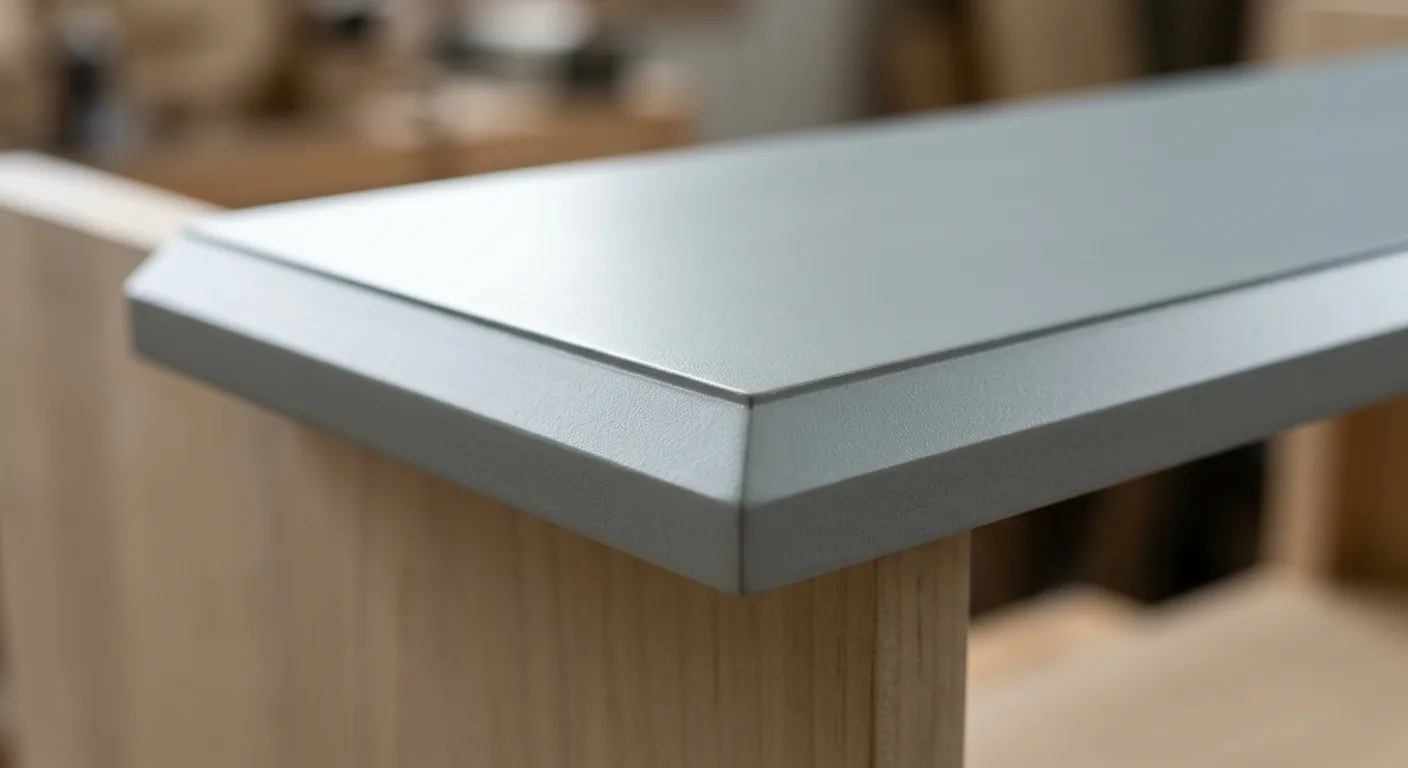
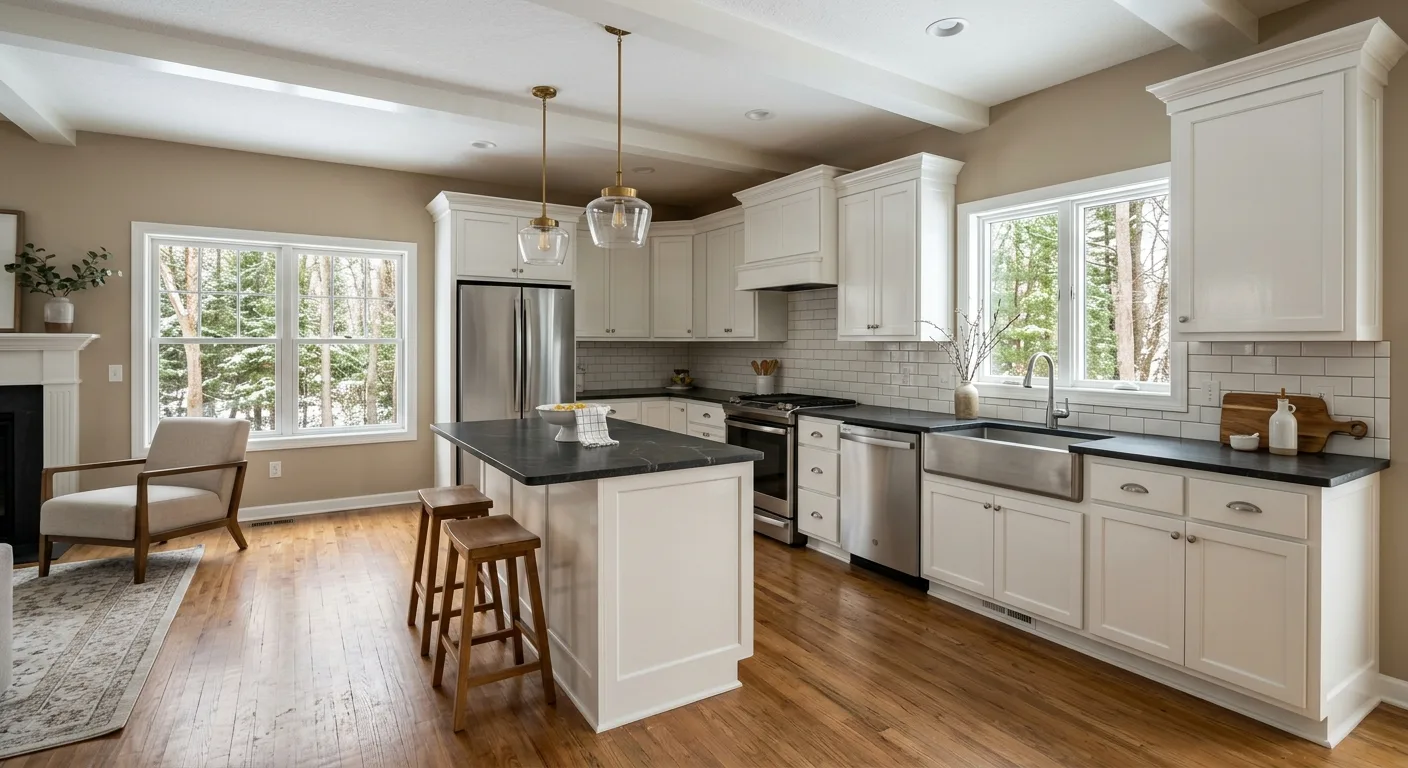
A few recent projects, photographed on the job. The finish is the whole point — so look at it up close.
Why spray application changes the result
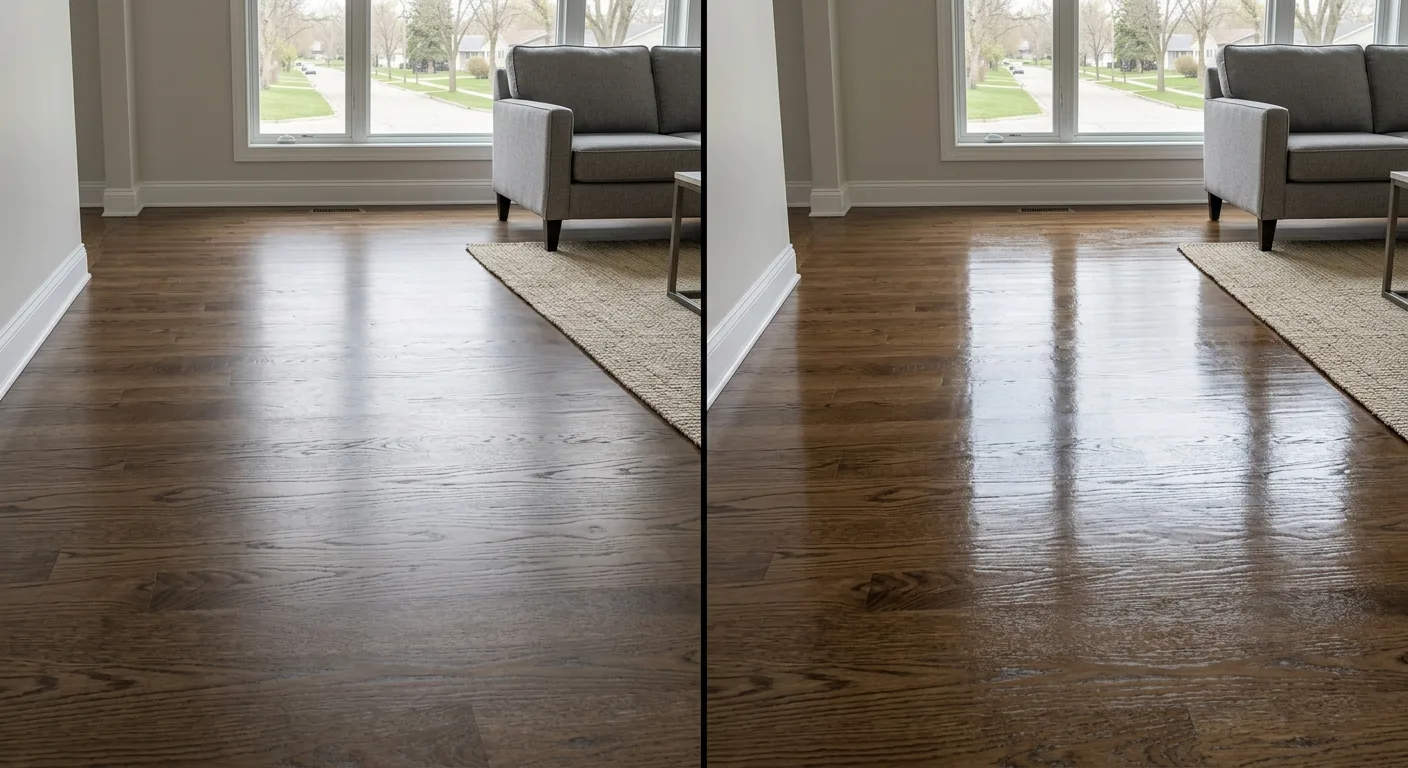
Brush and roller work leaves texture. Spray eliminates it.
The Process
How cabinet enamel work actually runs
- 01
Surface Prep and Priming
Doors and hardware come off. Surfaces get cleaned, deglossed, and sanded. A bonding primer goes on next -- the specific primer depends on what's underneath. Previously varnished oak needs a different primer than factory-finished thermofoil does. Skipping this step is why cabinet enamel peels.
- 02
Spray Enamel Application
Finish coats of waterborne alkyd or oil-based enamel go on in a controlled sequence with dry time between coats. I sand lightly between coats on most jobs. The number of finish coats depends on the color and the substrate. White over dark oak typically takes more build than a mid-tone over light wood.
- 03
Rehang and Final Inspection
Doors go back on after the finish has had adequate cure time -- not just dry time. Hinges get cleaned or replaced if they're corroded. I go over every door in raking light before I call the job done. If something doesn't look right, I fix it before I leave.
Finish Options
Enamel types and sheen levels worth knowing
Waterborne Alkyd Enamel
This is what I use on most residential cabinet jobs. It cleans up with water, has low odor, and cures to a hard alkyd-like finish. Benjamin Moore Advance and Sherwin-Williams Emerald Urethane are both in this category. Flow and leveling are excellent.
Oil-Based Enamel
Slower dry time means better leveling, which matters on complex profiles. Oil-based also produces a harder cure. The trade-off is longer ventilation requirements and cleanup with mineral spirits. I use it selectively based on the substrate and the homeowner's tolerance for dry time.
Satin vs. Semi-Gloss
Satin reads as cleaner and more modern on most kitchen styles. Semi-gloss is more durable and easier to wipe down but shows surface imperfections more readily. I'll give you my honest read on which sheen suits your cabinet profile before we start.
Color Over Oak
Oak grain telegraphs through finish coats if the primer work isn't right. On oak cabinets, I use a grain-filling primer step to flatten the surface before enamel goes on. That's what separates a finish that looks painted from one that looks factory-made.
Cabinet enamel pairs naturally with trim work
What makes a cabinet enamel job fail
- 01
No bonding primer on varnished surfaces
Enamel won't stick to a glossy varnish without mechanical and chemical adhesion prep. Skipping the bonding primer is the single most common reason cabinet paint peels within 12 months.
- 02
Brush marks not addressed before finish coats
Surface profile from the primer needs to be sanded smooth before enamel goes on. Any texture in the primer telegraphs straight through the finish, especially in semi-gloss.
- 03
Finish coats applied too thick
Thick enamel coats sag on vertical surfaces and take much longer to cure. Multiple thin coats produce a harder, more even film than one heavy coat.
- 04
Rehanging doors before full cure
Enamel that's dry to the touch isn't cured. Rehanging too early damages the finish at the hinge points and along the door edges where surfaces contact each other. I wait for proper cure time before hardware goes back on.
Straight from Google
What homeowners say about the work actually check
Steve + Team did a phenomenal job painting all 4400 sq ft interior painting while we were on vacation for a week, even finishing the job early! They fixed drywall errors (of which I was oblivious prior to him pointing out the flaws in the initial quote), touched up the enamel/molding, and did a beautiful job beyond our expectations even cleaning up so well after themselves. We were beyond impressed and would absolutely hire them again and recommend others do the same!
 Paul and Kim ShipleySep 2024 · Google
On my main level, Steve painted my oak kitchen cabinets, fixed my ceiling and then resprayed the entire ceiling. I added on to the project and had the downstairs painted. Steve and his team did a great job. I was impressed with the responsiveness and attention to detail. I couldn’t be happier with the results and would definitely recommend!
 Valerie KilianOct 2023 · Google
Our wooden window sills/frames needed some repair, and we hired Steve and his team to re-stain and varnish all the window frames in our house. I can't believe the difference. Many of them were faded and some looked like the wood was starting to rot. After Steve and his team were here, they look completely different. They did a great job, and I would definitely hire them again. Steve is very knowledgeable and takes the time to explain his process.
 Lorrie LabofskyOct 2022 · Google
We hired Steve to white enamel our main level cabinets, molding and stairwell which initially were oak. The finished product was beautiful and he did such an exceptional job that we additionally had him paint our ceiling and walls. Steve is extremely knowledgeable, reliable and easy to work with. He is committed to providing high quality services at reasonable costs. We will definitely be using him again for future projects!
 Melody KoerselmanDec 2021 · Google
Cabinet enamel questions I get asked regularly
What's the difference between waterborne alkyd enamel and standard latex paint for cabinets?
Can you enamel over cabinets that were previously varnished, or do they need to be stripped first?
How long do I need to stay out of my kitchen after cabinet enamel is applied?
Do you paint the interior of cabinet boxes, or just the doors and drawer fronts?
How is cabinet enamel different from cabinet refinishing?
Is semi-gloss or satin enamel better for kitchen cabinets?
Ready to see what your kitchen looks like with real enamel on the cabinets?
I work in Wright County and the western Twin Cities suburbs. Call or send a message and I'll come out to assess the cabinets, walk through the process, and give you an honest scope.